So I've struggled with this issue for a long time, and still haven't found a clear-cut stance on some issues, but maybe that's okay. It'd be interesting to know what you all think.
So there's a notion that technology and advances in science and such are actually a detriment to the advancement of the human race. One can argue for either side, but let's look at both sides of the coin. I was reminded of this issue while driving the other day, navigating using the cute little Tom Tom that my dad let me borrow. At one point, the GPS suggested a route that I knew wasn't as fast as the one I'm used to taking. But, instead of listening to my gut, I followed the machine's instructions and ended up losing precious time which made me late to an appointment. So why did I go against my gut feeling and trust the machine? I don't really know ... but I'm sad I did.
My point is, sometimes, I think the advancement of technology makes us a little lazy and, for a lack of eloquence, stupid. There are a plethora of devices out there, in my humble opinion, which keep us from learning and using our own brains. Of course there are exceptions. There's no way I could argue that something like an MRI machine makes us dumb. It helps us better diagnose medical problems and then solve them. But with other software, like a voice-to-speech software, I think it just makes us a little lazier (handicaps aside). And I'm afraid to get to the point where much needed skills (well, perhaps in the old days) may be lost to technological advances. I mean, when's the last time you read a paper map, using a legend, and measured the distance from your home to your destination with a ruler? Honestly ... I miss it. *sigh*
And, while I'm on the topic, let me give you my thoughts on Darwinian Medicine. While I think it's great to have things like penicillin and chemotherapy, you can't argue that humans, overall, have become weaker by preventing evolution with the advancement of medicine. We are, presently, incredibly susceptible to disease. Of course it's cruel and almost inhumane to think, "Well, if someone has a fever or a disease, let their body deal with it. If they die, then they weren't meant to survive," but to a point, I think that our current cultural/societal practices are halting our human development. Perhaps my bias also comes from my dislike of taking medicine when I'm sick. I'm a big advocate of natural remedies and letting a disease run its course if I think I can handle it. I frown upon 'quick fix' solutions for all the problems that we have nowadays, and how you can buy a pill for almost anything, be it restless legs, weight loss, or seasonal affective disorder (SAD).
This might sound somewhat unprofessional and borderline bitchy, but I think people should get off their butts and solve their problems the way they're meant to be solved - in a healthy, holistic fashion. Don't look for the easy way out. How can you expect to lose weight by taking a pill if you don't start exercising and eating healthier? How can you expect to get over depression if you wait for a pill to take effect and don't take any steps toward bettering your life's circumstances? These complaints and cases make me so angry ... it makes me lose faith in humanity sometimes. Well ... aside from whining about it, all I can do, as a future physician, is stress the importance of looking at problems from a holistic perspective. I can see myself denying someone medicine if they don't take steps towards bettering themselves, haha. Guess we'll see how that turns out.
My hope is that we, as a society, don't turn out like the people in Wall-E, and forget how to appreciate what's around us, forget our essential survival skills, and continue to keep evolution at bay until it's too late. So remember children, 1. Don't treat the symptom, treat the human, 2. Don't forget how to think, and 3. Let your kids eat their boogers when they're young (to develop their immune system).

Subscribe to:
Post Comments (Atom)
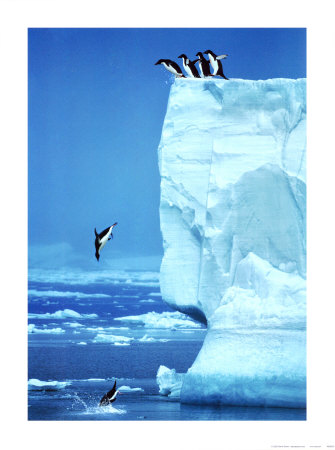

Humans aren't the only species experiencing backwards evolution, what with elephants losing their tusks, rattlesnakes losing their rattles, and all manner of game animals become smaller and weaker because the strongest specimens are picked off by hunters.
ReplyDeleteI don't take any kind of cold medication because I subscribe to the theory that anti-symptomatic medication prolongs the infection by suppressing the body's immune response.
As for the technology thing, you're opening up a box of issues that go far, far beyond anything you or I could ever anticipate. If your GPS tells you to make a left turn and you end up going the wrong way on a one-way street and crash into a Toyota Prius and wipe out a family of four, who's responsible? Are you really driving the car at that point? That question is the beginning of a PhD thesis.
--SDM
Is technology making people stupid, or are people using technology in stupid ways? Honestly, I don't think you can blame the science for the way it gets used. Anything is potentially harmful in the wrong hands (i.e. gunpowder used for fireworks vs. gunpowder used for guns). I think responsible advancement is always a good thing. It's the responsible part which is tricky. It's not a matter of avoiding or halting advancement, but a matter of learning to think in new ways, rather than stopping thought altogether. Change =/= bad, but the choices people make often = bad.
ReplyDeleteI can understand mourning lost skills if it's something major, but something like reading a legend on a map? Why retain the ability to use a tool that no longer is necessary? If that were the case, we'd all be using abacuses (abaci?) when perfectly good calculators were sitting right there, and trying to communicate through Morse code. Some things just come and go.
-sharona
actually i was reading a scientific journal the other day that was arguing against the case that our technology is preventing evolution from taking its course. Sure technology has changed darwinian evolution but the article went about explaining how even now our DNA has changed quite a bit in the last 500 years. It was quite the interesting read. Regardless yes it's true that technology has as a whole made people lazy. But that's what technology is there for, to make your life easier. If you take advantage of that fact, obviously there will be negative repercussions. Life's golden rule: everything in moderation!
ReplyDelete1.) I think you used the GPS navigation, for the same reason we all do; you trusted the machine more than you trusted yourself. And why shouldn't you. The Tom Tom's dedicated function is to take from departure point to your destination. If Tomas possessed complete and prefect knowledge of the continental US's roadways and directed the whole of his energies to plotting routes to and from particular places of interest, I’m sure you would have been just as confident in his ability to navigate you towards your destination.
ReplyDelete2.) How useful are the "ancient ways" anyway? I mean unless you’re on a deserted island and happen upon a map how useful is map-reading? In fact, is it really all that useful in that situation? All you have learned from the map is the location of your grave.
Laziness isn't a modern invention. Nor does technology create laziness; it, unfortunately, is a product of man's nature. Throughout our history, drastic improvements in human productivity have been marked by major advances in technology. If we work less than we worked as hunter-gatherers it's because we work better and smarter than our primitive ancestors, not because we are lazier than they were.
As for the MRI equipment, a case can be made against the over-dependence on any one tool, as it may erode proficiency in other areas or with other technologies.
3.) Darwinian medicine may have some merit in theory, but it will probably remain one of those branches of science that has little empirical support behind it (with regard to medicine's effect on human evolution). I find it hard to believe that the use of antibiotics and other drugs has a measurable effect on human evolution when such therapies have been practiced for so sort a time. So, in my opinion, speaking about how penicillin is retarding our development seems silly. Now, if you discussing effects of antibiotics on the evolution of bacteria, I would be much interested in joining in.
Secondly, I would argue that sanitation, more than medicine, has had the effect of improving world health and plays a more central role in “damaging” our chances of survival in the future. Contagious diseases still run rampant in parts of the Third World, - granted some of that may be influenced by political and economic factors - which remain the most among most unsantitory places to live. It seems obvious, that the best way to counter communicable diseases, especially when we learn of the financial and logistical costs of “curing” an epidemic,is to prevent pathogens from infecting hosts by denying them conditions that favor their growth.
4.) I agree America is becoming too dependent on prescription medication. We would love to solve all of our medical problems by swallowing a pill. It's understandable, though. Who wouldn't want to take a pill and lose 50 pounds? The lure of the pill as a quick fix is compounded by the pharmaceutical industry effort to market their drugs as panaceas and doctor's bias towards action when treating patients. Even so, we should not be so quick to dismiss newly documented medical disorders as minor concerns that need never be treated with medication, as that opinion may be informed, largely by our biases. (I bet people might have thought of diabetes and heart disease as "problems" when they were novel disorders. I bet it took a lot of gall to ask for insulin or nitroglycerin back then.)
5.)I can bring about a change of heart, regarding unique methods of practicing medicine. I think you mistake a doctor as a patient's chief executor of good health, when he is really more health advisor with expertise in administering treatments. A doctor has a lot influence in shaping the treatment, but can you imagine how terrifying it would be if he could overrule the patient’s wishes? Though, I’m confident you only have the best intention at heart when come to your patients, you place still a lot faith in your ability to accurately determine if an individual has made enough of effort to remedy their medical problems holistically; and that is equally dangerous. For if you are blinded by your biases or mistaken in your judgment even once, you may very well end up denying treatment to a deserving candidate.